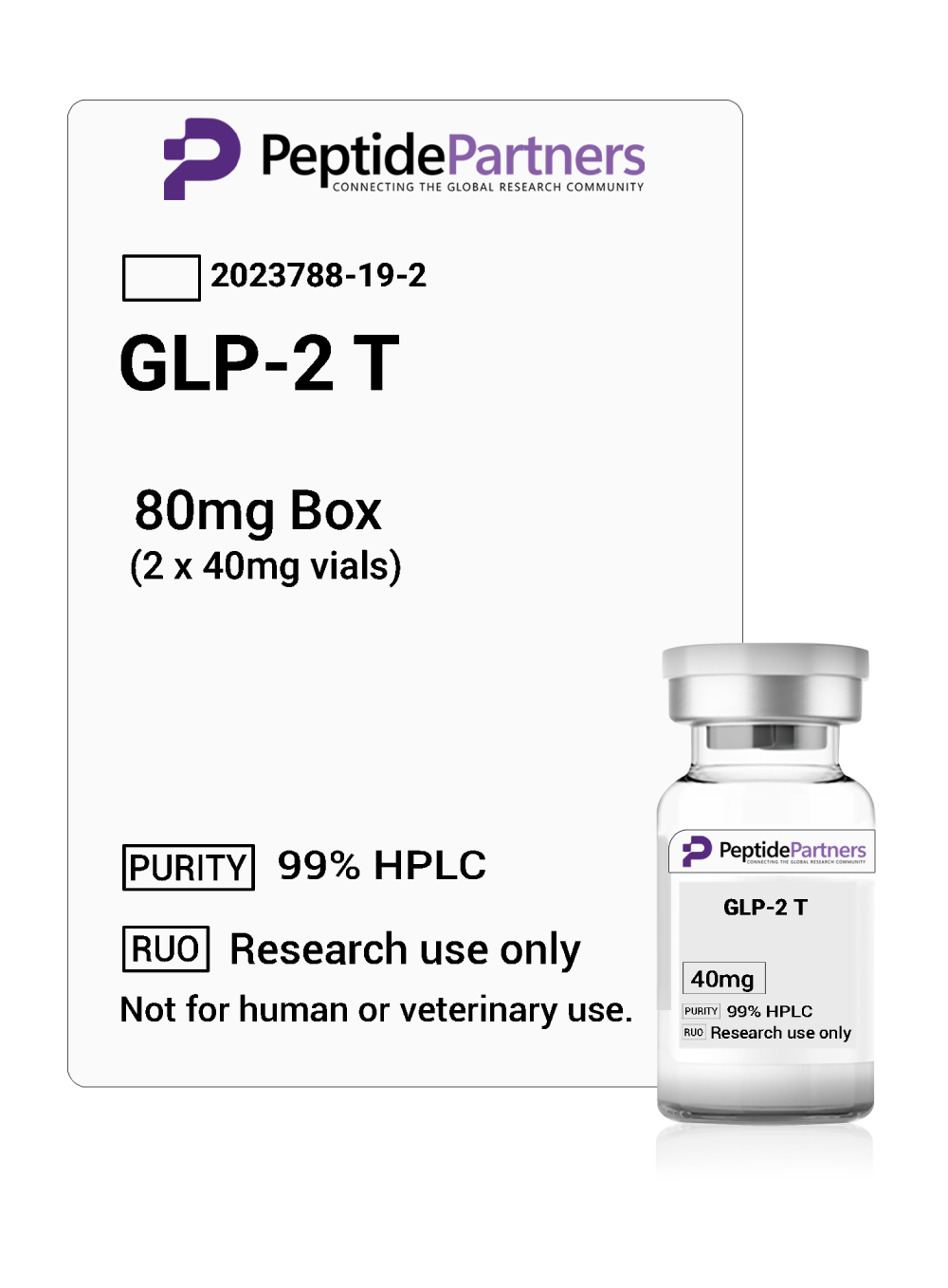


GLP-2 Tirzepatide (40mg vials)
Price range: $260.00 through $3,090.00
Tirzepatide Swipe right to view full table → Save over 80%! Peptide Sciences Liberty Peptides Cost per milligram $1.90 – $2.80 $18.33 $8.00 Purity 99.41% 98.8% 99.91% Certified Endotoxin-safe Yes No No Independently Tested Yes No No Peptide Partners Manufacturer ID: DF05 Batch ID: TZ20250915 Overview (For educational purposes only) Molecular Structure and Mechanism of Action Tirzepatide is a synthetic peptide that works through multiple complementary pathways to achieve its therapeutic effects. As an analogue of gastric inhibitory polypeptide (GIP), this 39-amino acid polypeptide has been chemically modified by lipidation to improve cellular uptake and metabolic stability[1]. Dual Receptor Activation The primary mechanism of tirzepatide involves simultaneous activation of both GIP and GLP-1 receptors, with a notably higher affinity for GIP receptors[1]. This dual agonism produces greater metabolic improvements compared to selective GLP-1 receptor agonists alone[1]. At the molecular level, tirzepatide demonstrates biased agonism at the GLP-1 receptor, preferentially activating cyclic AMP signaling rather than β-arrestin recruitment[2]. Metabolic Effects Tirzepatide exerts multiple effects that contribute to its clinical benefits: Enhanced Insulin Secretion: Stimulates both first-phase and second-phase insulin secretion in a glucose-dependent manner, improving postprandial glucose control[3][2][4] Glucagon Suppression: Reduces glucagon levels when blood glucose is elevated, limiting inappropriate hepatic glucose production[3][2][4] Delayed Gastric Emptying: Slows gastric emptying, helping control postprandial glucose excursions and promote satiety, although this effect diminishes over time[5][3] Appetite Reduction: Reduces food intake through central mechanisms, as both GIP and GLP-1 receptors are present in appetite-regulating brain regions[5] Enhanced Insulin Sensitivity: Improves cellular response to insulin, important in insulin-resistant states such as type 2 diabetes[3][2] The molecule’s pharmacokinetics are enhanced by strong albumin binding (≈99%), contributing to its long duration of action and weekly dosing schedule[3]. Medical Indications and Applications Tirzepatide has received regulatory approval for multiple clinical applications, with ongoing research exploring additional uses. Type 2 Diabetes Management Tirzepatide is FDA-approved to improve glycemic control in adults with type 2 diabetes[5][1]. It can be used: As monotherapy In combination with metformin, sulfonylureas, or SGLT2 inhibitors Alongside diet and exercise[5] The medication increases insulin when glucose is elevated, reduces hepatic glucose output, and slows gastric emptying[5]. Weight Management Tirzepatide is approved for chronic weight management in: Adults with obesity (BMI ≥30) Adults with overweight (BMI ≥27) with weight-related comorbidities[5][6][1] It reduces appetite, enhances satiety, and prolongs fullness[5]. Use requires a reduced-calorie diet and increased activity[5][6]. Obstructive Sleep Apnea Tirzepatide is FDA-approved for treating moderate-to-severe obstructive sleep apnea (OSA) in adults with obesity[5][6][1]. Investigational Uses Research is ongoing in: Chronic kidney disease (CKD)[6] Heart failure with preserved ejection fraction (HFpEF)[6][1] Cardiovascular outcomes in obesity[6] Preliminary HFpEF results suggest a 38% reduction in major complications vs placebo[1]. Clinical Effectiveness and Outcomes Weight Loss Efficacy SURMOUNT trials show significant long-term body-weight reductions: SURMOUNT-1 22.9% average weight reduction at 15 mg 94% reduced risk of progression to type 2 diabetes 99% remained diabetes-free NNT = 9[7][8] SURMOUNT-3 6.9% initial lifestyle-based loss + 21.1% additional with tirzepatide Total mean loss 26.6% Placebo regained 3.3%[7] SURMOUNT-4 20.9% loss during lead-in +5.5% with continuation vs +14.0% regain on placebo 89.5% maintained ≥80% of initial loss Total loss 25.3% vs 9.9% placebo[8] Comparative Efficacy Tirzepatide produces greater mean weight reduction than semaglutide in comparative trials[6]. Diabetes Management Outcomes Superior A1C reductions vs insulin degludec in SURPASS-3[9] Greater HbA1c reduction compared to semaglutide[1] Superiority over dulaglutide, semaglutide, and basal insulins confirmed in meta-analysis[1] Safety Profile and Side Effects Common Side Effects The most common side effects primarily affect the gastrointestinal system: Nausea[5][8][1] Diarrhea[5][8][1] Vomiting[5][8][1] Constipation[5][8][1] Abdominal discomfort[5][8][1] Dyspepsia[5] GERD[5] Gas/bloating[5] Other common side effects: Decreased appetite[5][1] Hair loss[5] Fatigue[5] Injection-site reactions[5] These side effects are generally mild/moderate and improve with continued use[7][8]. Serious Adverse Events Thyroid C-cell tumors warning based on animal studies[5] Pancreatitis risk requiring discontinuation if suspected[5] Gallbladder disease, including gallstones/cholecystitis[5] Allergic reactions[5] Hypoglycemia when combined with sulfonylureas or insulin[5] Kidney injury[5] Diabetic retinopathy complications[5] A 2024 systematic review found no increased pancreatitis risk[1]. Dosing and Administration Administration Method Subcutaneous injection once weekly using a prefilled autoinjector[5][3][4] Can be taken any time of day, with or without food Available Formulations Pens: 2.5 mg, 5 mg, 7.5 mg, 10 mg, 12.5 mg, 15 mg per 0.5 mL[5] Vials: 2.5 mg/0.5 mL, 5 mg/0.5 mL[5] Dose Titration Start at 2.5 mg weekly Titrate over 4–20 weeks to 5, 10, or 15 mg[6] Max dose: 15 mg weekly[6] Regulatory Status and Development History Patent applications began 2016[1] Phase III trials completed 2021[1] FDA approval for diabetes: 2022[1] EU/Canada/Australia approvals: 2022[1] FDA approval for weight management: 2023[6] UK weight-management approval: 2023[1] FDA approval for OSA: 2024[1] The FDA classifies tirzepatide as first-in-class[1]. Conclusion Tirzepatide marks a major advance in metabolic disease treatment, with impressive results in weight reduction, glycemic control, and prevention of diabetes progression. Its dual-receptor mechanism provides broader metabolic effects than earlier GLP-1 agonists. While gastrointestinal effects are common, most are tolerable, and serious adverse events are uncommon. Ongoing research continues to expand understanding of its therapeutic potential. ⁂ Wikipedia: Tirzepatide FDA Clinical Pharmacology Review DrugBank: Tirzepatide Britannica: Tirzepatide Drugs.com: Tirzepatide FDA: Weight-Management Approval PubMed 39536238 PubMed 38078870 Diabetes.org SURPASS Coverage
| QUANTITY(mg) |
80 ,200 ,400 ,800 ,1200 |
|---|
Related products


5-Amino-1MQ (10mg vials)
Price range: $56.00 through $195.00
Cagrilintide (10mg vials)
Price range: $335.00 through $1,050.00
GLP-1 Semaglutide (10mg vials)
Price range: $285.00 through $976.00
GLP-3 Retatrutide (24mg vials)
Price range: $230.00 through $1,512.00

Ipamorelin (10mg vials)
Price range: $82.00 through $577.00
Sermorelin (10mg vials)
Price range: $98.00 through $797.00