
KLOW Blend: BPC-157/TB-500/GHK-Cu/KPV (80mg vials)
Price range: $240.00 through $975.00
• Purity: 99.86% (multi-vial, independently tested)
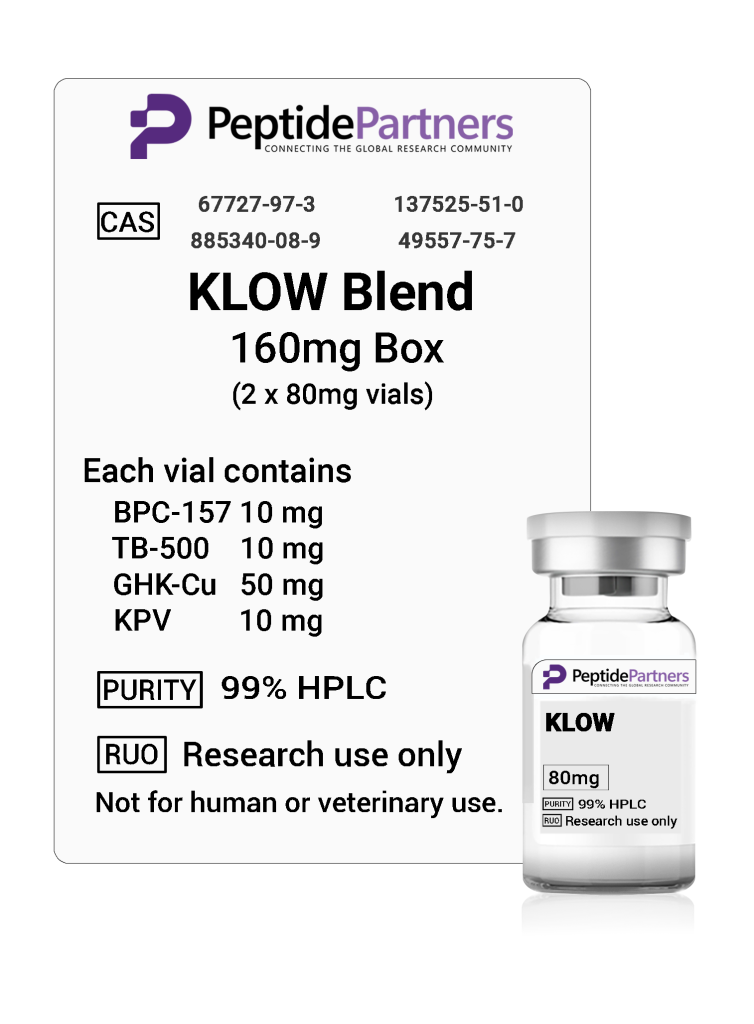
• Format: 80mg vials (3 mL capacity) — BPC-157 10mg + TB-500 10mg + GHK-Cu 50mg + KPV 10mg
• Box Options: 160mg, 400mg, 800mg combinations
• Testing Status: Endotoxin, heavy metals & purity screening PASSED
• Cost Efficiency: $1.22 – $1.50 per milligram
KLOW Blend is a four-component research peptide complex combining BPC-157, TB-500, GHK-Cu, and KPV for multi-target in-vitro experimentation. This research-grade material supports laboratory studies focused on cellular stress responses, cytoskeletal dynamics, copper-dependent signaling pathways, and melanocortin receptor pharmacology.
- Independent certificate details, manufacturer IDs, and batch IDs should be reviewed before purchase when available.
- Order cancellations for full refunds are available before shipment; shipped orders cannot be cancelled or refunded.
- For damaged or incorrect goods, photograph the outer packaging, inner packaging, and product labels, then email support within 48 hours of carrier delivery.
Buy KLOW Blend: BPC-157/TB-500/GHK-Cu/KPV – Peptide Partners
Product Overview & Specifications
KLOW Blend is a multi-peptide research complex containing four distinct compounds: BPC-157 (body protection compound), TB-500 (thymosin beta-4 fragment), GHK-Cu (glycyl-L-histidyl-L-lysine copper complex), and KPV (lysine-proline-valine tripeptide). Peptide Partners supplies this research-grade blend for in-vitro testing, laboratory experimentation, receptor pharmacology, structural biology, and preclinical cellular research.
Published studies on the individual components have examined cellular protection mechanisms, cytoskeletal organization, copper-dependent gene regulation, melanocortin receptor signaling, inflammatory pathway modulation, and tissue repair models. Research areas include peptide stability in multi-component formulations, synergistic cellular effects, receptor binding kinetics, and analytical characterization of complex peptide mixtures.
The product name supplied for this listing is “KLOW Blend: BPC-157/TB-500/GHK-Cu/KPV.” Researchers should verify the exact identity, sequence, formulation ratios, and batch-specific certificate of analysis before beginning any experiment. Findings from published studies on individual components should not be assumed to apply to this specific blend formulation.
Product Specifications
| Specification | Details |
|---|---|
| Product name | KLOW Blend: BPC-157/TB-500/GHK-Cu/KPV |
| Compound type | Multi-peptide research complex (4 components) |
| Component peptides | BPC-157 (10mg), TB-500 (10mg), GHK-Cu (50mg), KPV (10mg) per 80mg vial |
| Primary research areas | Cellular protection mechanisms, cytoskeletal dynamics, copper-dependent signaling, melanocortin receptor pharmacology, and multi-peptide interaction studies |
| Product format | 80 mg vials |
| Vial size | 80 mg |
| Vial capacity | 3 mL |
| Available box combinations | 160 mg, 400 mg, and 800 mg |
| Multi-vial purity | 99.86% |
| Independent testing | Yes |
| Endotoxin screening | Passed |
| Heavy-metals screening | Passed |
| Purity screening | Passed |
| Manufacturer ID | WF03 |
| Batch ID | KW202604 |
| Cost per milligram | $1.22–$1.50 |
The stated 99.86% purity is based on multi-vial testing of the complete blend. Researchers should review the batch-specific certificate of analysis for component ratios and individual peptide purity before beginning any experiment.
Component Peptide Research Context
BPC-157 (Body Protection Compound-157)
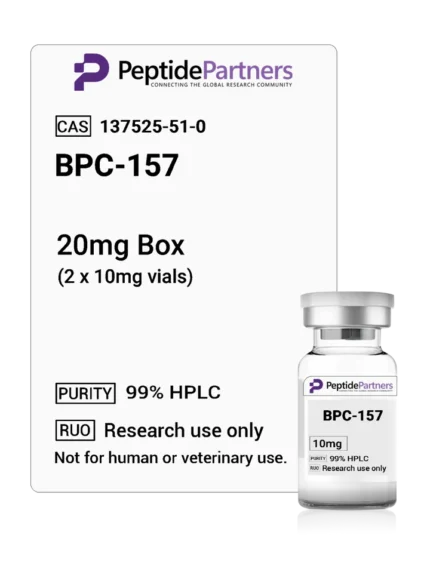
BPC-157 is a 15-amino-acid peptide fragment derived from body protection compound. Published research has examined its effects in cellular stress models, cytoskeletal organization studies, and inflammatory pathway investigations. In laboratory settings, BPC-157 has been studied for its interactions with growth factor signaling, cellular migration assays, and protective mechanisms against oxidative stress.
TB-500 (Thymosin Beta-4 Fragment)
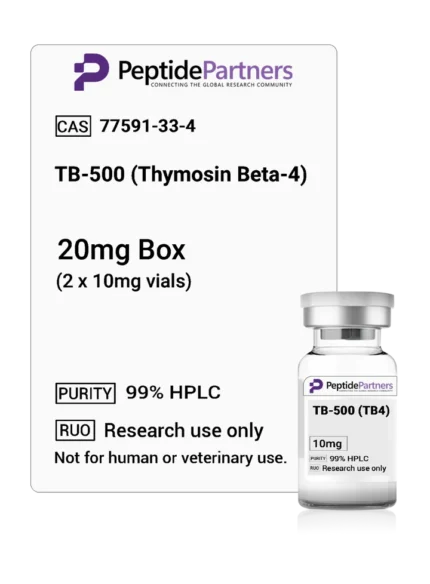
TB-500 represents a synthetic fragment of thymosin beta-4, a 43-amino-acid peptide involved in actin cytoskeleton regulation. Research applications include studies of cell motility, cytoskeletal dynamics, wound healing models, and angiogenesis assays. The peptide has been characterized for its G-actin sequestering activity and role in cellular structural organization.
GHK-Cu (Glycyl-L-Histidyl-L-Lysine Copper Complex)
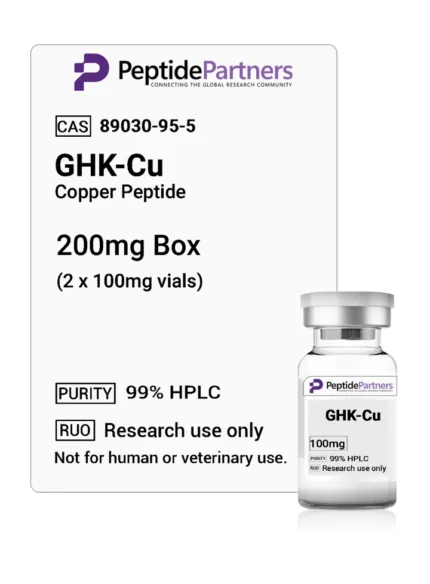
GHK-Cu is a copper-binding tripeptide complex studied for its role in copper-dependent gene regulation, antioxidant enzyme activity, and extracellular matrix remodeling. Laboratory research has examined GHK-Cu effects on collagen synthesis, metalloproteinase activity, gene expression profiling, and cellular differentiation pathways in various cell culture models.
KPV (Lysine-Proline-Valine)
KPV is a tripeptide fragment derived from alpha-melanocyte-stimulating hormone (α-MSH). Research applications include melanocortin receptor binding studies, inflammatory signaling investigations, and peptide structure-activity relationship analyses. The compound has been characterized for its receptor selectivity and stability in various experimental conditions.
Multi-Component Research Considerations
When working with multi-peptide blends like KLOW, researchers should consider potential interactions between components in experimental systems. Factors include peptide stability in solution, receptor cross-reactivity, synergistic or antagonistic cellular effects, and analytical challenges in quantifying individual components.
Researchers are advised to conduct preliminary characterization experiments to establish baseline behavior of the blend in their specific laboratory systems before proceeding with complex experimental designs. Component ratios, concentration ranges, and time-course effects should be empirically determined for each research application.
Standard Research Disclaimer
Research Use Only. Not for use in diagnostic tests.
This product is solely intended for research purposes as a chemical compound. It is designated exclusively for in-vitro testing and laboratory experimentation. All information provided about this product is educational and should be evaluated by appropriately qualified research personnel.
By law, bodily introduction of this product into humans or animals is strictly prohibited. This compound must not be used, administered, or represented as a drug, food, dietary supplement, cosmetic, anti-aging product, wound-healing agent, or medical treatment. It is not intended to diagnose, treat, cure, or prevent any disease. It should be handled only by licensed and qualified professionals in an appropriately equipped laboratory and in accordance with applicable laws, institutional procedures, and relevant safety requirements.
| Choose pack |
2 vials × 80mg (160mg total) ,5 vials × 80mg (400mg total) ,10 vials × 80mg (800mg total) |
|---|
- All of our manufacturing partners produce peptides using the Lyophilization (Freeze Drying) process, ensuring products maintain stability for shipping and storage for 12+ months.
- In lyophilized form, they are shelf-stable for many weeks. However, for long-term storage, it is recommended to store them in the freezer.
- We often hear concerns about the standard "discard after 28 days of first use" disclaimer. Don't worry, this has nothing to do with studies regarding the efficacy of specific peptides. 28 days is the FDA requirement for producers of multi-use vials to prove their bacteriostatic maintains efficacy. This minimum requirement becomes the de facto standard.
- In our experience, if you use proper sterile procedures and refrigerated storage, you can continue sampling from the same reconstituted vial for 3+ months.
Certificate records
No published certificate records are available for this product.
Search Certificate LedgerRelated products
BPC-157 (10mg vials)
Price range: $106.00 through $780.00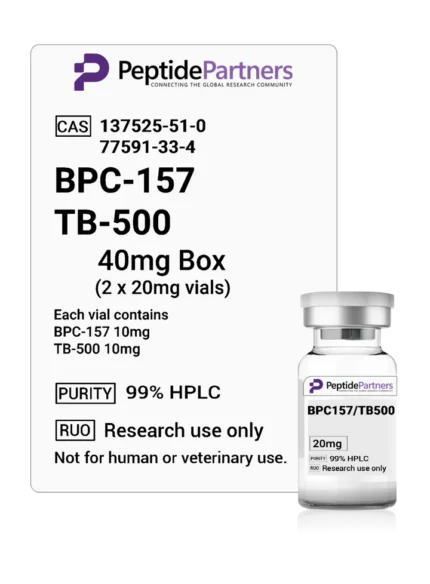
Combo Vial: BPC-157/TB-500 (20mg vials)
Price range: $224.00 through $880.00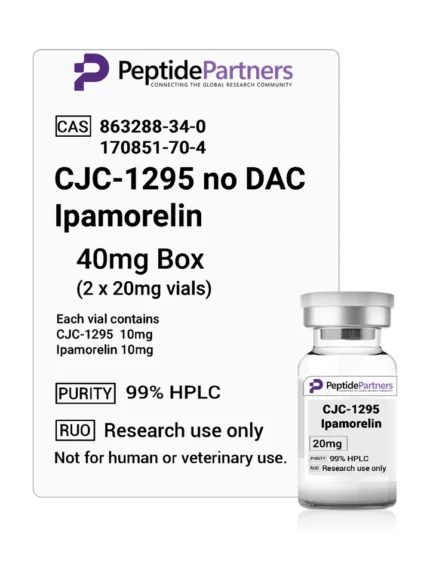
Combo Vial: CJC-1295 no DAC/Ipamorelin (20mg vials)
Price range: $220.00 through $877.00
GHK-Cu (100mg vials)
Price range: $150.00 through $900.00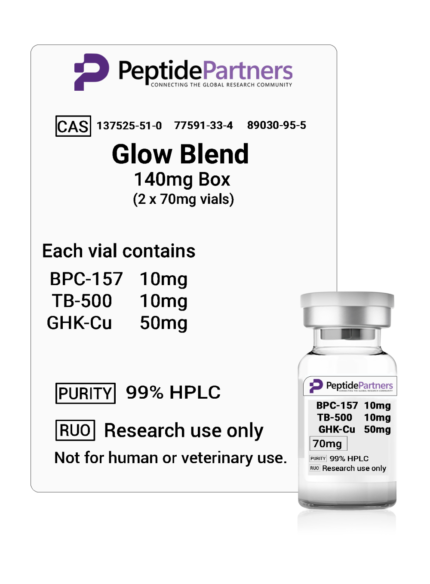
GLOW Blend: BPC-157/TB-500/GHK-Cu (70mg vials)
Price range: $182.00 through $770.00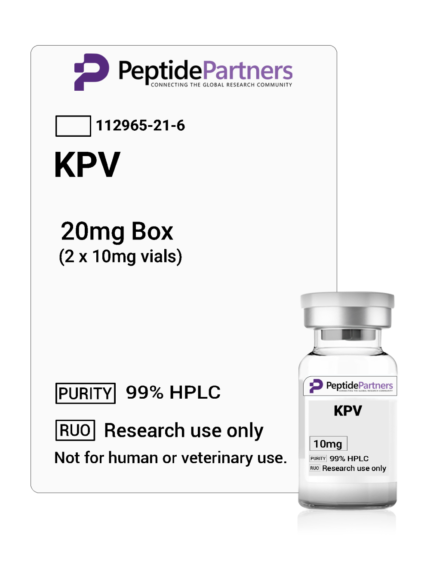
KPV (10mg vials)
Price range: $88.00 through $320.00
